Hamdi Saidani
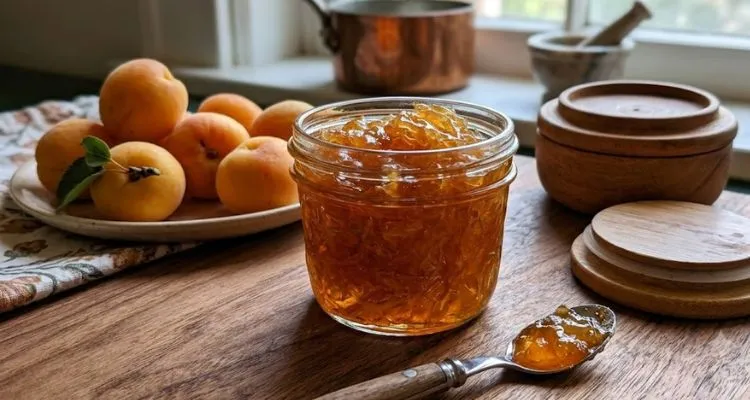
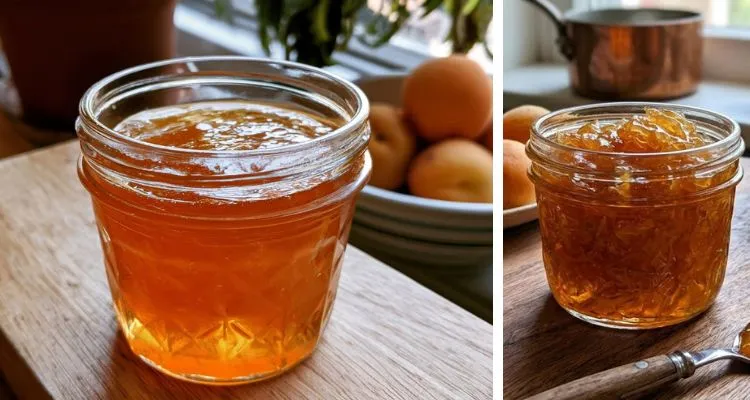
 This clear, jewel-toned apricot jelly is made by cooking fresh apricots into juice, straining out all the solids, then setting the liquid with pectin, lemon juice, and sugar. It takes about 40 minutes of active cooking and yields beautifully smooth, spreadable jars.
The straining step is what makes this a jelly instead of a jam. You boil the apricots with water for 10 minutes, mash them until they break apart, then push everything through a fine mesh strainer. All the skins, pulp, and chunks stay behind, and only the clear juice passes through. Press hard on the fruit to get every drop. You need about 5 1/2 cups of juice for the recipe to set properly.
The pectin and sugar work together here the same way as any cooked jelly. Add the pectin and lemon juice to the juice first, bring it to a hard rolling boil, then dump in all the sugar at once and boil for exactly 1 1/2 minutes while stirring nonstop. That timing is precise for a reason. Too short and the jelly stays runny. Too long and it overcooks into something rubbery.
Apricot Jelly Recipe
Description
This apricot jelly strains cooked fresh apricots into clear juice, then sets it with pectin, lemon juice, and sugar for a smooth, jewel-toned spread ready for canning.
Ingredients
Instructions
- Combine the pitted apricots and water in a large stock pot. Bring to a boil.
- Cook for 10 minutes, breaking the fruit apart with a wooden spoon or potato masher as it softens.
- Pour the mixture through a fine mesh strainer set over a bowl, pressing down firmly on the fruit to extract as much juice as possible. You should end up with about 5 1/2 cups of clear juice. Discard the skins and solids.
- Wipe any chunks from the pot and return the strained juice to it. Add the pectin, lemon juice, and butter if using.
- Bring to a rolling boil over high heat, stirring frequently. The boil should not stop even while you stir.
- Add all the sugar at once. Stir continuously until the mixture returns to a full rolling boil.
- Time for exactly 1 1/2 minutes, stirring nonstop the entire time. When the timer goes off, remove the pot from the heat immediately.
- Ladle into prepared jars and proceed with canning if desired.
FAQs
What do I serve it with?
On warm toast, biscuits, or swirled into plain yogurt. It also works as a glaze brushed over roasted pork or chicken. Spread it between the layers of the Strawberry Oatmeal Bars in place of the preserves for a smooth, clear apricot version. You can also fold a spoonful into the Apricot Jam Recipe base for a double-apricot intensity.
What’s the difference between this jelly and the apricot jam?
Jelly strains out all the fruit solids and uses only the clear juice, so it’s smooth and transparent. Jam keeps the crushed fruit in the finished product, giving it a thicker, chunkier texture. Both taste like apricot, but the mouthfeel is completely different.
Why add the butter?
A half teaspoon of butter reduces the foam that forms on the surface during the hard boil. Less foam means less skimming and cleaner looking jars. It’s optional and doesn’t affect the flavor or the set.
Why does all the sugar go in at once?
The pectin needs to react with the full amount of sugar simultaneously at a rolling boil to gel properly. Adding it gradually or reducing the amount throws off the chemistry and the jelly won’t set. It looks like a lot, but that ratio is what makes the texture work.
How do I know if the jelly has set properly?
After canning and cooling, tilt a jar. The jelly should hold its shape and wobble slightly without sliding. If it’s still liquid after 24 hours, the boil time was too short or the juice measurement was off. You can reboil it with a little extra pectin to try to rescue it.