Hamdi Saidani
 This golden, tender Pioneer Woman fig almond cake is made with browned butter, almond flour, sour cream, a hint of cardamom, and fresh sliced figs pressed into the top before baking in a cast iron skillet. It takes about 15 minutes to prep and 30 to 35 minutes in the oven.
Browning the butter is the first step and the most important one to get right. You cook the cubed butter in the skillet, swirling constantly, until the milk solids turn golden and the kitchen smells nutty. This happens fast, about 6 to 8 minutes, and the window between browned and burnt is seconds. Pour the butter out of the skillet immediately into a bowl to stop the cooking. That browned butter gives the cake a warm, toasty depth that regular melted butter can’t touch.
The batter is thick on purpose. Almond flour and sour cream make it dense enough to hold the fig slices on top without them sinking to the bottom during baking. You stir everything together by hand like cornbread, no mixer needed. The two-temperature bake starts at 400°F to set the top quickly, then drops to 350°F so the center cooks through without the edges burning. Let it cool in the skillet for at least 15 minutes before slicing so the crumb firms up enough to hold a clean cut.
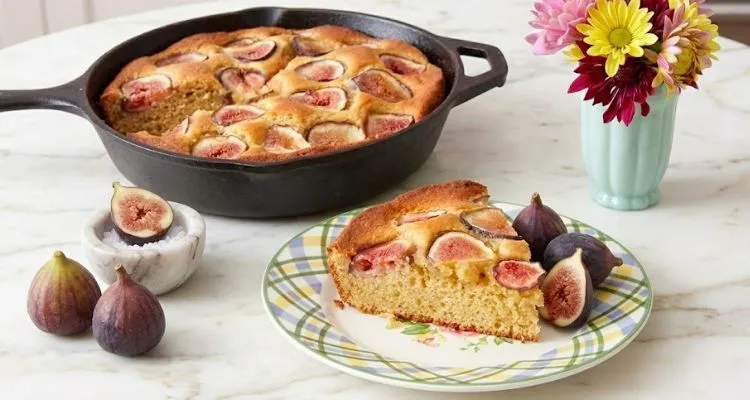
Pioneer Woman Fig Almond Cake
Description
This Pioneer Woman fig almond cake bakes browned butter batter with almond flour, sour cream, and cardamom in a cast iron skillet, topped with fresh sliced figs.
Ingredients
Instructions
- Preheat the oven to 400°F.
- Place the cubed butter in a 10-inch cast iron skillet over medium heat. Cook, swirling around the sides and bottom, until it smells nutty and the solids turn golden brown, 6 to 8 minutes. Immediately pour the browned butter into a medium bowl to stop the cooking. Let cool for 10 minutes. Do not wipe out the skillet.
- In a large bowl, whisk together the eggs, 2/3 cup granulated sugar, brown sugar, vanilla, and almond extract until lighter in color.
- In a medium bowl, combine the all-purpose flour, almond flour, baking powder, cardamom if using, baking soda, and salt.
- Gradually whisk the dry ingredients into the egg mixture, alternating with the sour cream. Stream in the browned butter while stirring constantly until combined. The batter will be thick.
- Pour the batter into the buttered cast iron skillet. Arrange the fig slices on top, pressing them lightly into the surface. Sprinkle with the remaining 1 tablespoon of sugar.
- Bake for 15 minutes at 400°F, then reduce the oven to 350°F. Continue baking until a toothpick inserted in the center comes out clean, 15 to 20 minutes more.
- Transfer to a cooling rack and let cool for at least 15 minutes before slicing. Serve with whipped cream and extra fresh figs.
FAQs
What do I serve it with?
A dollop of sweetened whipped cream and a few extra fresh fig slices on the side. A cup of Earl Grey or a small glass of dessert wine like vin santo pairs beautifully with the nutty, cardamom notes. For a dessert table, the Peach-Plum Upside-Down Cake next to it gives guests another skillet-baked fruit cake in a completely different flavor direction. The Peach-Pecan Crisp alongside adds a crumbly, spoonable option against this sliceable cake.
Do I need to peel the figs before baking?
No. Fig skins are thin and tender, similar to grape skins. They soften in the oven and become part of the texture. Removing them wastes time and takes away some of the visual beauty of the sliced fruit on top.
Can I use dried figs if fresh aren’t in season?
Fresh figs are the point of this recipe. Dried figs have a completely different texture and sugar concentration that throws off the balance of the batter. If fresh figs aren’t available, wait until they are. This is a seasonal cake worth making at the right time.
Why does the recipe start at a higher temperature then drop?
The initial blast of 400°F sets the top of the cake quickly so the figs stay in place and the surface firms up. Dropping to 350°F lets the center bake through gently without the edges or the fruit burning. Staying at the high temperature the whole time would leave the middle raw.
What does the cardamom do and can I skip it?
It adds a subtle floral, warm note that complements both the figs and the almond flour. Skipping it won’t ruin the cake, but it will taste flatter. If you don’t have cardamom, a small pinch of cinnamon is the closest substitute, though the flavor profile shifts to something more familiar and less interesting.