Hamdi Saidani
 This rich, buttery apricot jam cake is made with a from-scratch sour cream batter and a full jar of apricot preserves swirled through the middle and top in two layers, baked in a bundt pan until golden. It takes about 20 minutes to prep and just under an hour to bake.
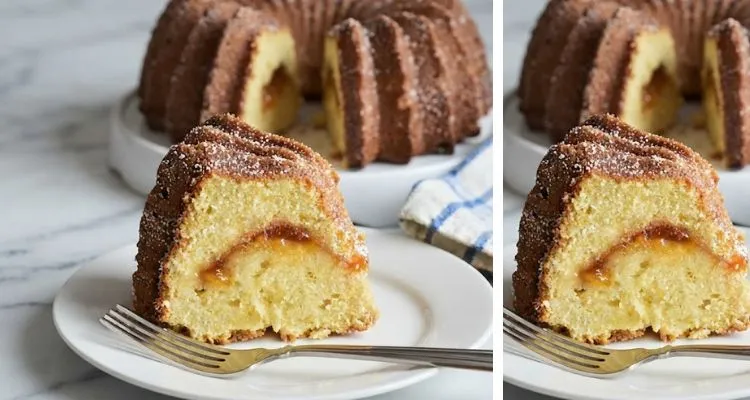
The preserves don’t get mixed into the batter. You pour half the batter in, spread half the preserves across the surface leaving a small gap at the edges, then repeat. That layering creates a visible ribbon of apricot running through the center of the cake when you slice it. Keep the preserves about half an inch from the edges so they don’t leak down the sides of the pan and burn against the hot metal.
The batter itself is a classic creaming method. Beat the butter and sugar for a full 5 to 7 minutes until truly light and fluffy, not just combined. That long beat traps air into the fat, which is what gives the cake its lift and tender crumb. Adding the flour in three batches alternating with sour cream keeps the batter from splitting or getting tough. The sour cream adds tang and moisture that balances the sweetness of both the sugar in the batter and the preserves in the middle.
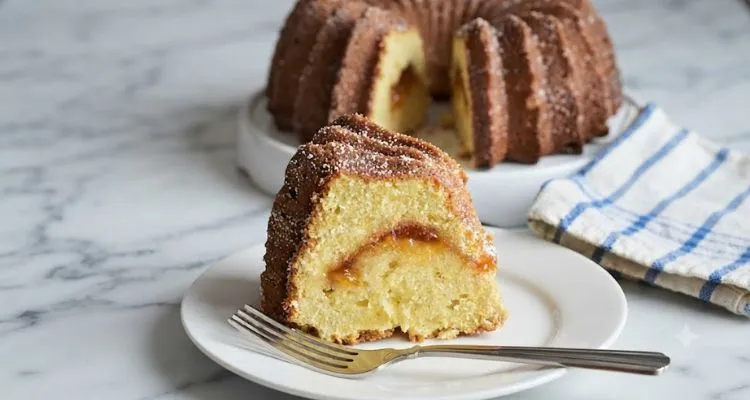
Apricot Jam Cake
Description
This apricot jam cake layers a rich sour cream batter with swirls of apricot preserves in a bundt pan, baked until golden with a fruity ribbon through every slice.
Ingredients
Instructions
- Preheat the oven to 350°F. Grease and flour a 12-cup fluted tube pan.
- Combine the flour, baking powder, baking soda, and salt in a medium bowl. Set aside.
- Cream the butter in a large bowl with an electric mixer. Gradually add the sugar and beat until light and fluffy, 5 to 7 minutes.
- Add the eggs one at a time, beating well after each addition.
- Add the flour mixture in 3 batches, alternating with the sour cream, beating briefly on low speed after each addition.
- Pour half the batter into the prepared pan. Spoon half the apricot preserves over the batter, spreading to within 1/2 inch of the edges.
- Pour the remaining batter over the preserves. Spoon the rest of the preserves on top, again leaving a gap at the edges.
- Bake until a toothpick inserted in the center comes out clean, 55 to 60 minutes.
- Cool in the pan for 15 minutes. Run a knife around the edges to loosen, then carefully invert onto a serving platter.
FAQs
What do I serve it with?
A light dusting of powdered sugar and a cup of coffee or tea. For a dessert table, the Upside-Down Apricot Cake next to it gives guests a caramelized, fresh-fruit version of an apricot cake in a completely different style. The Apricot Nectar Cake alongside offers a lighter, glazed option for anyone who wants lemon-apricot flavor without the rich sour cream base.
Can I use a different flavor of preserves?
Raspberry, strawberry, or peach preserves all work with the same method. The swirl will taste different but the technique stays identical. Apricot gives the most balanced, not-too-sweet ribbon that doesn’t overpower the buttery cake around it.
Why leave a gap between the preserves and the pan edges?
Preserves that touch the hot metal caramelize and burn, sticking to the pan and tearing the cake apart when you try to flip it out. That half-inch buffer keeps the preserves encased in batter on all sides so they stay as a clean ribbon inside.
Why beat the butter and sugar for so long?
Five to seven minutes traps a significant amount of air into the fat. That air expands during baking and gives the cake its rise and soft, tender crumb. Two minutes of beating produces a denser, flatter cake that doesn’t have the same light texture.
How do I get the cake out of a bundt pan without it sticking?
Grease and flour every ridge thoroughly before pouring in the batter. After baking, cool for exactly 15 minutes, run a thin knife around the edges and the center tube, then flip confidently in one smooth motion. Hesitating or tilting halfway usually causes the cake to crack.